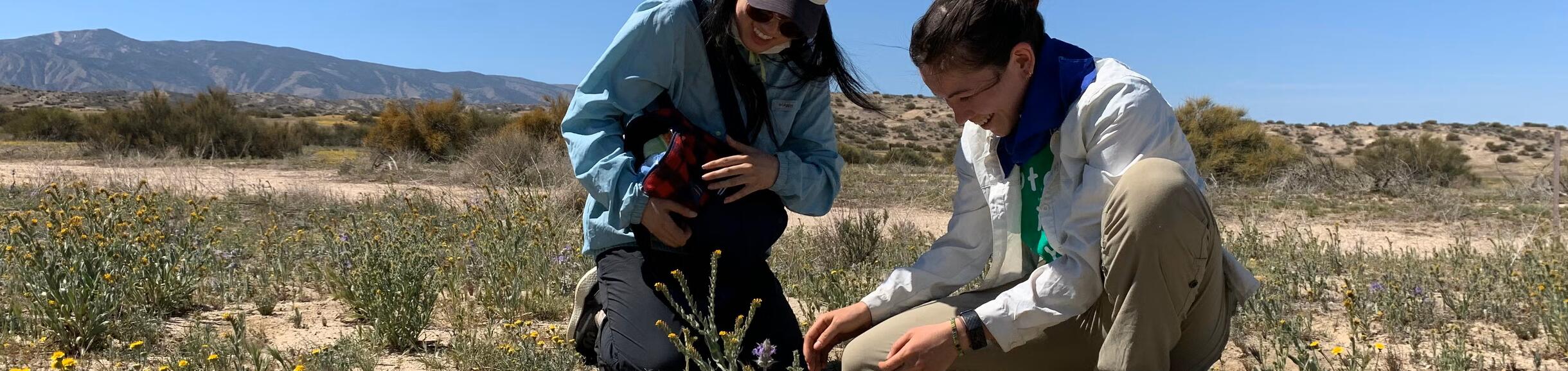
Why research matters
The Plant Biology program requires undergraduates to participate in research because it can shape or clarify future career choices and offer several important benefits:
- Undergraduate research experiences show students how the knowledge they learn in classes is created — through asking questions, designing experiments, and interpreting evidence.
- By participating in research, undergraduate students build conceptual skills, including data collection, analysis, and critical thinking, as well as technical expertise.
- Students have the opportunity to contribute to new scientific discoveries and technological advances. Hands-on work also strengthens resumés, helping students stand out in a competitive job market.
- Working closely with faculty and postgraduate scientists allows students to build their professional network. These relationships can often lead to stronger, more meaningful letters of recommendation.
FAQs
-
When should I start looking for a research opportunity?
The best time to start research is usually in the sophomore or junior year, but may be earlier, after completing foundational coursework and learning to balance academic demands with other activities. Students benefit most from research experiences that last a year or more as it provides the time needed to become proficient and independent. It is usually more difficult to find a research position as graduation nears.
-
What compensation can I expect from a research position?
Common options are an hourly wage or research for credit. BPSC 197 and BPSC 199 are two courses that offer a graded research opportunity and fulfill the B.S. program requirement. Some research positions start on a volunteer basis, allowing flexibility and an initial assessment by the lab and the student before further commitment.
-
How much time will I be spending on research?
Two units of research are required for the B.S. degree. For BPSC 197 and BPSC 199, expect to spend three hours on research per week for each registered unit. The expectations for volunteer or paid undergraduate researchers varies by lab; 10 to 12 hours per week is a good rule of thumb for making significant progress in experiments and skill development.
-
How do I find a research opportunity at UCR?
This is a great topic to discuss with your faculty advisor. The Undergraduate Research Portal is also an excellent resource for finding research opportunities. Jobs are posted in the uResearch Portal and you can also find a list of organized campus research programs. However, many research opportunities are not advertised and are only found through directly contacting a lab of interest.
-
How should I apply for a research position?
First, identify a lab whose research you find interesting. Each department has a listing of their faculty, often with a brief description of their research areas and links to their lab webpages for more details. The Department of Plant Sciences faculty page is here. Spend a little time reading and thinking about their work. Second, send a concise, carefully edited email that introduces who you are, what you are requesting, and why. Briefly explain why you are inquiring about a research position with this lab in particular. Attach a resume or CV, preferably in pdf format. Third, if you don't receive a response within a week, send a follow-up email. More guidance can be found at the Undergraduate Research Portal.
-
What are Summer Research Experience for Undergraduate (REU) programs?
Summer Research Experience for Undergraduate (REU) programs are full-time, paid research positions typically lasting 10 weeks. Several REU programs or similar campus-sponsored programs are offered each year at UCR, including
NSF CEPCEB-REU programRISE
and others listed at the Undergraduate Research Portal.REUs also offer opportunities to experience different research at other institutions and will usually cover room, board, and travel expenses.
A database of NSF-funded REU sites can be searched here. Check for deadlines and eligibility.
-
Are there fellowships or grants I can apply for to support my research?
Yes! Just to list a few:
Chancellor's Research Fellowship: https://engage.ucr.edu/research/chancellor_fellowship
Minigrants for Undergraduate Research: https://engage.ucr.edu/research/minigrants
ASPB Summer Undergraduate Research Fellowship (SURF) Award: https://aspb.org/awards-funding/aspb-awards/surf/
CNAS Scholarship Opportunities: https://cnasstudent.ucr.edu/scholarship-opportunities
California Native Plant Society: https://www.cnps.org/education/students/chapter-scholarships
Faculty Research Areas
Faculty Member | Evolution | Ecology | Physiology | Development | Cell & Molecular Biology | Genetics | Agriculture or Horticulture |
|---|---|---|---|---|---|---|---|
| Mary Lu Arpaia | ● | ● | |||||
| Julia Bailey-Serres | ● | ● | ● | ||||
| Jim Baird | ● | ||||||
| Chris Catano | ● | ||||||
| Sean Cutler | ● | ||||||
| Flor Ercoli | ● | ● | ● | ||||
| Thomas Eulgem | ● | ● | |||||
| Jorge FS Ferreira | ● | ● | |||||
| Juan Pablo Giraldo | ● | ● | ● | ||||
| Thomas Girke | ● | ||||||
| Venugopala Gonehal | ● | ● | |||||
| Zhenyu Jia | ● | ● | |||||
| Adam Jozwiak | ● | ||||||
| Tracy Kahn | ● | ● | |||||
| Sunil Kenchanmane-Raju | ● | ● | ● | ||||
| Daniel Koenig | ● | ● | ● | ● | ● | ||
| Loralee Larios | ● | ||||||
| Larry Li | ● | ||||||
| Amy Litt | ● | ||||||
| Donald Merhaut | ● | ● | |||||
| Dawn Nagel | ● | ● | |||||
| David Nelson | ● | ● | |||||
| Sara Ohadi | ● | ● | |||||
| Carolyn Rasmussen | ● | ● | ● | ||||
| Louis Santiago | ● | ● | |||||
| Danelle Seymour | ● | ● | ● | ||||
| Maggie Sogin | ● | ● | |||||
| Carol Tardivo | ● | ● | |||||
| Shizhong Xu | ● | ||||||
| Qiguo Yu | ● | ● |